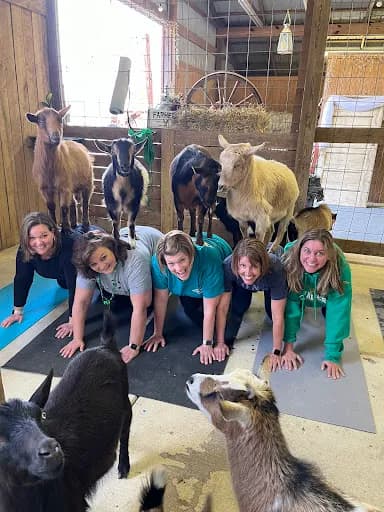
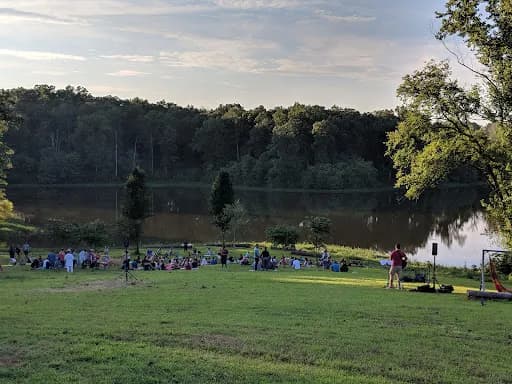
The goat yoga Virginia scene runs through the corridor between Richmond and the Potomac, anchored by working farms that happen to host yoga classes rather than studios that happen to borrow goats. That distinction matters when you're standing in a pasture watching a Nigerian Dwarf kid climb onto someone's mat mid-warrior pose.
Glen Allen holds the densest concentration of sessions
Goat Yoga RVA and Pactamere Farm both operate out of the Glen Allen area, giving the Richmond suburbs two distinct options within minutes of each other. Goat Yoga RVA runs a straightforward operation: show up, unroll your mat in the pasture, let the goats do their work. Pactamere sits on more open ground with a lake visible from the practice area, which changes the light considerably depending on when you book. The two venues draw from the same Short Pump and Henrico County population base but feel different on the ground — one tighter and more intimate, the other with more space for the herd to scatter and return.
Nokesville is the rural option near DC
The Little Goat Farm at the Lake sits in Prince William County's still-agricultural western edge, roughly forty minutes from Alexandria during non-rush hours. The setting is noticeably more pastoral than anything closer to the Beltway — actual lakefront, actual pasture, actual distance from strip malls. Classes here attract a mix of Northern Virginia weekenders willing to drive and locals who already know the farm from its regular operations. The goats are handled daily, which shows in how they move through a class — less chaotic, more curious.
Alexandria sessions are urban-adjacent, not urban
Beth A Wolfe Yoga operates closer to the city, but don't expect a rooftop or parking lot situation. This is still farm-adjacent goat yoga, just accessible without crossing the Occoquan. The convenience tradeoff is real: shorter drive, less of that deep-country immersion that makes Nokesville or Glen Allen feel like an actual farm visit. For DC residents who want the experience without committing to a Sunday morning highway slog, it solves the problem directly.
Virginia farms run real herds, not rental animals
Every listed Virginia venue maintains its own goats year-round. The babies that climb on backs in April are the same herd being managed through winter feeding and kidding seasons. This isn't universal nationally, and it changes the experience — the animals are habituated to human contact in a sustained way, not just trucked in for events. First-timers should expect farm conditions: uneven ground, grass and likely mud, animals that have opinions about where they want to stand.