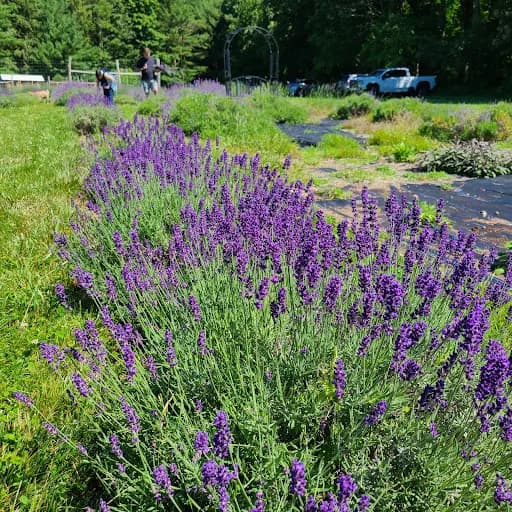
Goat yoga in New Jersey splits cleanly between two distinct regions: the sandy, pine-scented southern counties and the rolling farmland of Hunterdon and Somerset. These are working farms first, and the yoga mats get tucked between actual agricultural operations. Lavender Koi Yoga in Berlin operates on ground that grows exactly what the name suggests, while Mad Lavender Farm in Milford has built its entire visitor experience around that same purple crop. The goats are part of the ecosystem, not a novelty rental.
Hunterdon County draws the most consistent crowds
The Bubbly Goat in Stockton and What A View Farm in Hillsborough Township sit in the state's premier agricultural corridor. Stockton sits along the Delaware River, and the terrain here is hilly, open, and distinctly rural despite being within striking distance of Princeton and Flemington. What A View Farm earns its name from the ridge-top positioning in Hillsborough Township—the backdrop during a morning session is genuine central Jersey farmland, not a suburban subdivision. Brookhollow's Barnyard, operating out of the 07005 zip code near Caldwell, pulls from a different demographic entirely: North Jersey residents who want a farm experience without driving past the I-78 corridor.
The Pine Barrens venues lean into the landscape
Angels in the Pines Goat Farm, LLC operates in the 08215 zip code deep in the Pinelands, where the soil is sandy, the canopy is pitch pine, and the humidity hangs differently than anywhere else in the state. This is not manicured farmland. The setting is rawer, more isolated, and the goats here are accustomed to the scrubby, coastal-plain vegetation that defines southern Jersey. Lavender Koi Yoga in Berlin offers a counterpoint—still southern, still Pine Barrens-adjacent, but with the cultivated rows of lavender providing visual structure that the wilder pines lack.
Expect farm conditions, not studio polish
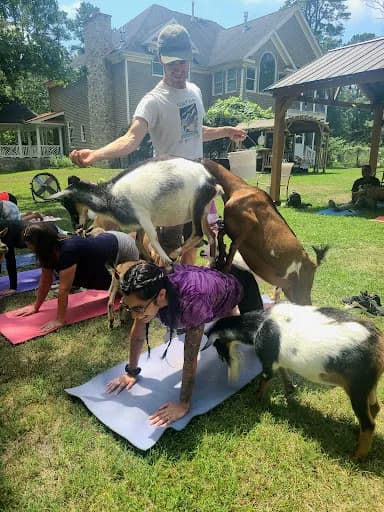
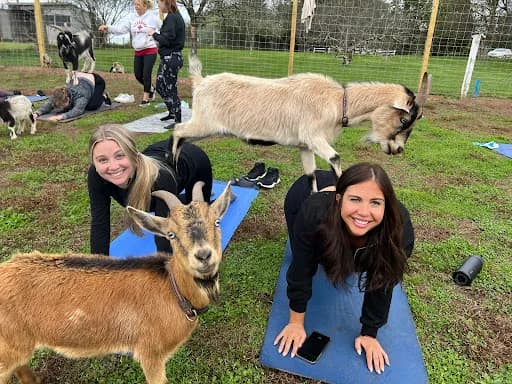
New Jersey goat yoga means grass underfoot, not bamboo flooring. The six venues in the directory all operate outdoors in fair weather, and the animals are young Nigerian Dwarf goats that will climb on backs, tug at clothing, and demand attention mid-pose. First-timers should understand that the yoga instruction is real but secondary—the goats dictate the pace. Closed-toe shoes for before and after the session are non-negotiable at these working properties. The experience is genuinely agricultural, and you will leave with hay on your mat.