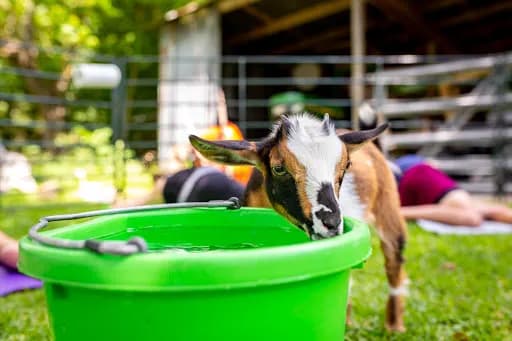
The Gulf Coast corridor runs the state's goat yoga scene
Four of the five dedicated goat yoga farms in Texas sit within a roughly 100-mile arc stretching from Alvin through Tomball and west toward the College Station area. This concentration makes goat yoga Houston's most accessible major-metro market in the state, even though the actual venues operate in the surrounding towns and unincorporated counties where zoning allows livestock. ROSE Therapeutic Farm & Goat Yoga in the 77423 zip and Goats on the Bayou Farm LLC in Alvin anchor the southern end, while Goat Yoga Texas in Tomball catches the northern suburbs. LTD Farms near College Station breaks from the standard format by running both goat yoga and alpaca pilates, a combination that draws from the Texas A&M student population and weekend traffic out of Bryan.
GOGA in the Hill Country operates on a different calendar
The lone outlier geographically is GOGA Goat Yoga in 78738, sitting in the Lakeway area west of Austin. This venue pulls from a different demographic entirely — the Hill Country weekend crowd and Lake Travis corridor rather than the Gulf Coast commuter belt. Anyone searching for goat yoga Dallas will find the closest quality option is actually the Tomball location, a roughly four-hour drive rather than a local session. The Texas market has not expanded into North Texas in any meaningful way, leaving Dallas-Fort Worth as a gap in the state's goat yoga map.
Therapeutic framing separates Texas farms from the national model
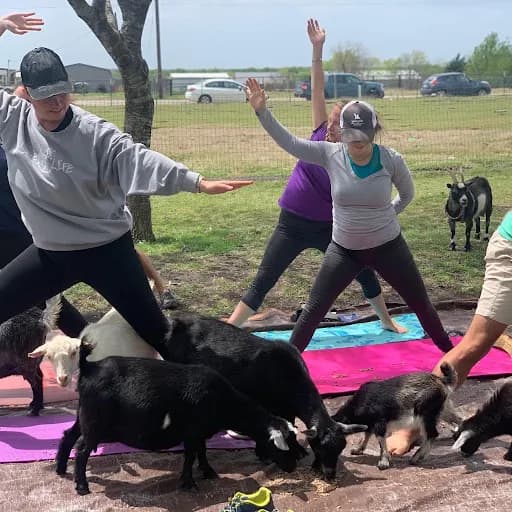
What distinguishes the Texas roster from states like Florida or California is the number of venues explicitly rooted in therapeutic or rescue operations. ROSE Therapeutic Farm structures its sessions around animal-assisted wellness rather than treating goats as a novelty prop. This changes the tone of the classes — slower pacing, more emphasis on the animals' behavior and handler education, less focus on Instagram-ready moments. First-timers expecting a chaotic, laugh-heavy hour should adjust expectations at these locations. The goats are still interactive, but the session operates closer to a facilitated animal encounter than a standard vinyasa class with livestock wandering through.